
Substrates of Salvation
The fruits of grace-fuelled stewardship.

Creation not only reveals God to us; through matter as well as spirit He calls us into participation. The telos of the material culminates in union with our Creator. The transcendentals of truth, goodness, and beauty detected in the natural order reveal the Artificer’s fingerprints. The stars set in the firmament, the floral and arboreal, the mannerisms of companion animals, and the song of a spouse’s laughter all declare the glory of God: “For from the greatness and beauty of created things comes a corresponding perception of their Creator” (Wisdom 13:5).
Our Lord provides primaeval particles, shapes them into forms, and breathes life into their being. He brought forward select flora and fauna and placed them under the dominion of man who—in inheriting His likeness—applies his creative capacity to bring forth fruit.
Isolated by iniquity, man can do nothing but pave the way to his eternal death. Through His mercy, forgiveness, and sacrifice, Christ recovered us from the clutches of darkness. Through His grace alone, man is moved to interact with creation— spoken forth through Logos—in ways that steer him towards his salvation.
Materially, root, fruit, fowl, and ruminant nourish and continually construct the flesh, sustaining our bodies to read Scripture, participate in the sacraments, and pray. Spiritually, the written word and Living Word feed the soul with Spirit-breathed wisdom and salvific bread. Our Lord uses tangible matter as a vehicle of grace. Moved by His love and likeness, man uses reason and creativity to shape the natural world into apexes upon which sit nexuses; He uses man, who uses nature, to reveal and heal.
In the context of the written word, monastic communities leveraged all manner of created things to put inspired truth to page. The hides of calves, the carbon of burned branches, the gum of the acacia tree, and both water and wine—those substances that flowed from Christ’s side.
The gall of oak trees also played an important role in crafting the ink of uncial scripts. These growths emerge from arboreal giants following an intricate chemical coaxing. Upon the reception of a gall wasp sting, the oak heeds the call. Forming a protective covering of tissue, the responsive bark protects the wasp’s larvae at no benefit to trunk nor canopy—all by the good creative will of God.
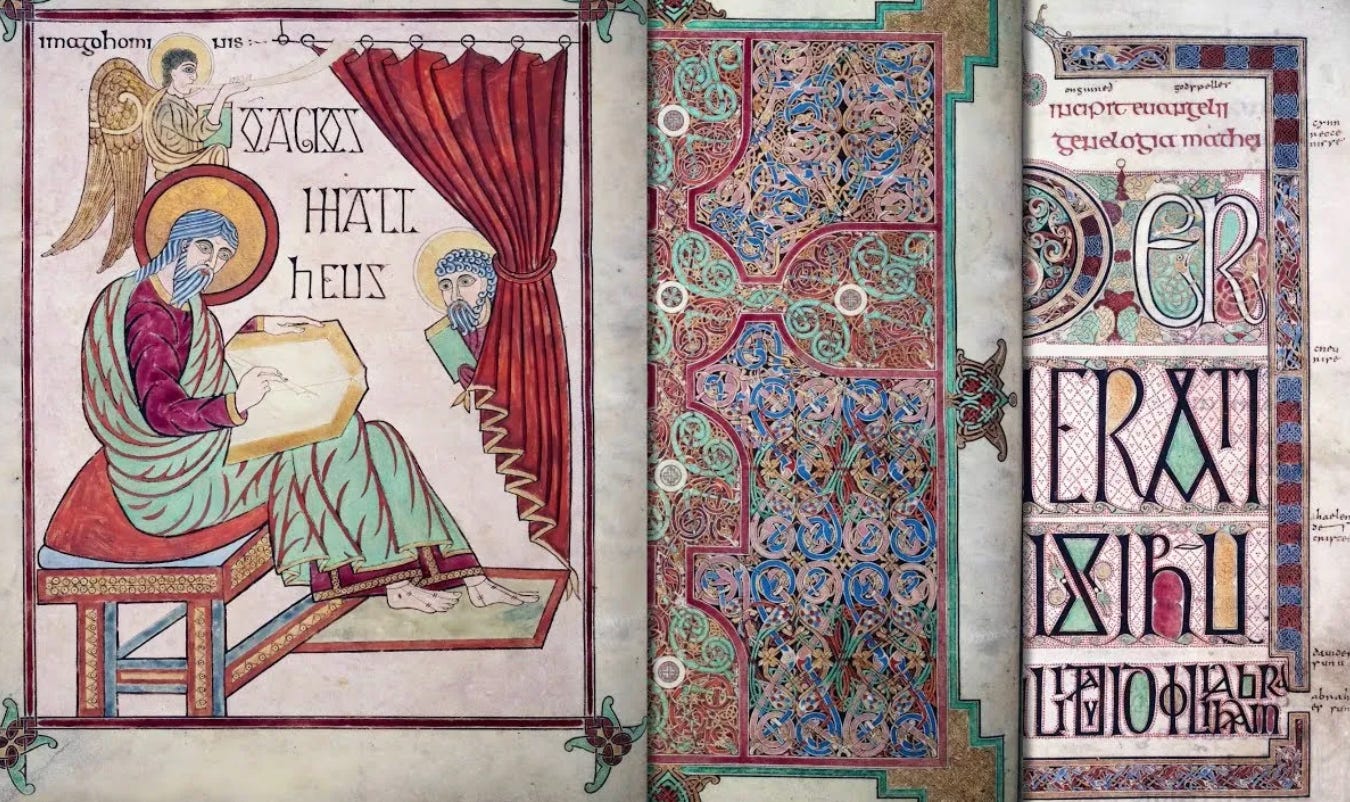
The Benedictine monastic centres of the Anglo-Saxon kingdoms shaped matter to scribe and illuminate Scripture. They dipped goose feather quills into inks crafted from woad, galls, mined copper and ochre, ground seashells, lichen, blue azurite, and green malachite. They scribed majuscule script onto calf skin vellum and goatskin parchment, united with oak and elm binding. This nexus of the labour of man and the grace of God bestows Divine Revelation upon the faithful: “All scripture is inspired by God and profitable for teaching, for reproof, for correction, and for training in righteousness, that the man of God may be complete, equipped for every good work” (2 Timothy 3:16–17).
We also encounter this grace-led synergy of stewardship in the Blessed Sacrament. God provides the wheat; man tills the soil, sows the seed, mills the grain, and makes the bread. God provides the grapes; man tends the vine, harvests the fruit, and presses and ferments the juice to make wine. Christ made the ultimate sacrifice at the victory of Calvary; in memory, the priest makes an offertory. Through the act of consecration, the Holy Spirit transforms matter stewarded by man—who is moved not by his fallen will but by the grace of the Triune God—into Christ’s salvific Body and Blood.
Musing on this interrelationship in his Tree of Life, H.J. Massingham writes:
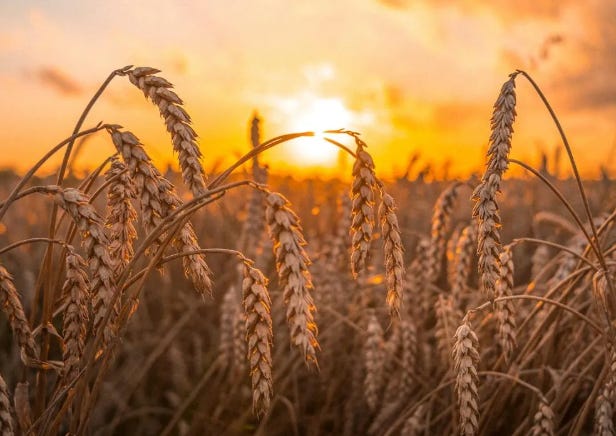
“Until it is natural for man to think once more of the field of corn as part of the sacrament of bread, the religious can never be reunited with the organic view of life”, adding, “When the sun gilds the field of ripening wheat, we are witnessing year by year a symbol of the Incarnation.”
The priest then speaks the word and administers the Word under the roof of the Temple of God. A bastion clothed in dressed stone, hewn timber, and rived slate, adorned with sculpted statues, joined pews, and a stone altar that once dwelt in the heart of a mountain. The crystallised blood of trees incenses; the wax of bees illumines. Laying the typological foundations of worship, the hands of prophets crafted the flood-worthy Ark of wood, the Ark of the Covenant, and the Tabernacle.
These achievements are a humbling reminder that alone we are wretched, but God’s redeeming Grace touches us even in our fallen state. Infused with the sap of the Living Vine, good fruit sets. Man plays a minor role in stewarding and crafting the physical substrates of the supernatural Scriptures and the Sacraments, those sweetest of gifts that God bestows to enable us to grow in the virtues of faith, hope, and charity—to enter life eternal.
An altogether lovely meditation.